A BMW manual transmission is a gearbox that lets the driver change gears using the clutch pedal and gear lever. It gives you direct control over the car’s power and speed. Many drivers enjoy it because it offers a more connected and engaging driving experience.
Even though automatic cars are more common today, many BMW fans still prefer a manual transmission. It makes every drive feel more exciting and rewarding. In addition, many classic and performance BMW models are famous for their smooth manual gearboxes.
This guide explains BMW manual transmission models, how they work, and their key features. You will also learn about common problems, maintenance tips, repair costs, and the differences between manual and automatic transmissions. By the end, you will have the information you need to choose and care for a BMW manual transmission.
How It Works
A BMW manual transmission uses a clutch pedal and a gear lever to change gears. When you press the clutch, it disconnects the engine from the transmission. This allows you to shift gears smoothly. After that, releasing the clutch reconnects the engine and sends power to the wheels.
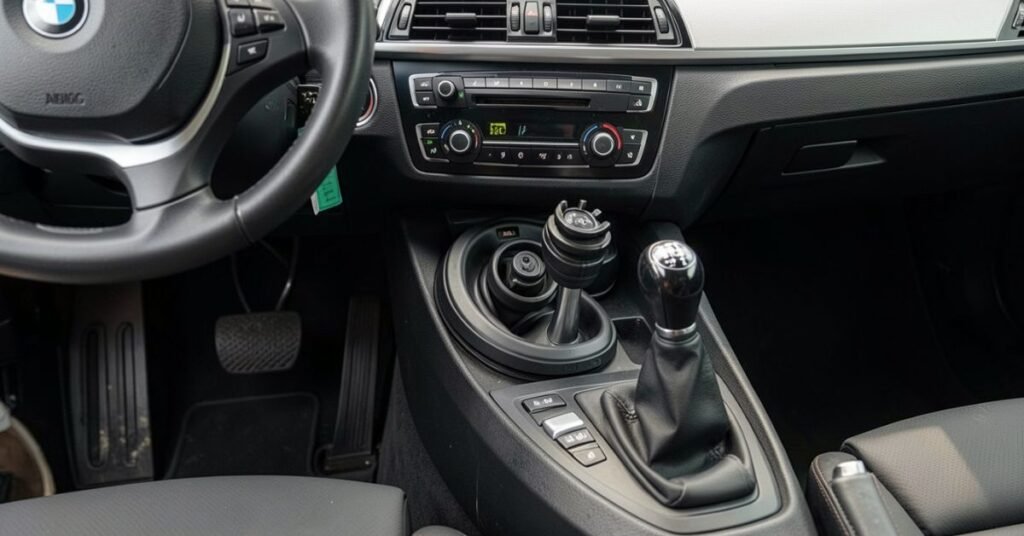
Inside the transmission, several gears work together to control speed and torque. Lower gears provide more power for starting and climbing hills. Higher gears help the car cruise at faster speeds while using less fuel. As a result, the engine runs more efficiently in different driving conditions.
The driver chooses the right gear based on speed and road conditions. Smooth clutch control and timely gear changes improve performance and comfort. Moreover, proper shifting reduces wear on the clutch and transmission. Therefore, learning the correct technique helps the transmission last longer.
Transmission Types
BMW has used different types of manual transmissions over the years. Most older models came with 5-speed manual gearboxes. Later models introduced 6-speed manual transmissions. These newer gearboxes offer smoother shifting and better fuel efficiency.
A 5-speed manual transmission is simple and reliable. It works well for daily driving and many classic BMW models. In contrast, a 6-speed manual transmission provides closer gear ratios. As a result, it improves acceleration while keeping engine speed lower on highways.
Some high-performance BMW M models use stronger manual transmissions. These gearboxes are built to handle more power and torque. Moreover, they deliver quicker and more precise gear changes. Therefore, they provide a more engaging driving experience for enthusiasts.
Key Features
A BMW manual transmission gives the driver full control over gear changes. It uses a clutch pedal and a gear lever for smooth shifting. The gearbox responds quickly to driver input. As a result, it creates a more engaging driving experience.
Most BMW manual transmissions offer precise and short gear throws. The clutch feels balanced and easy to control. Moreover, the gear ratios are designed to provide strong acceleration and efficient highway driving. This helps improve both performance and comfort.
BMW builds its manual transmissions with durable components for a long service life. They work well with both standard and performance engines. In addition, many models include a smooth synchronizer system for easier shifting. Therefore, a well-maintained BMW manual transmission can deliver reliable performance for many years.
BMW Manual Transmission Benefits
A BMW manual transmission gives you more control over the car. You can choose the right gear for every driving situation. As a result, the car feels more responsive and enjoyable to drive. Many drivers also like the stronger connection between the car and the road.
A manual transmission can cost less to maintain than some automatic systems. It has fewer complex parts in many models. Moreover, regular maintenance helps keep it working smoothly for a long time. This can reduce repair costs over the life of the vehicle.
Many BMW enthusiasts prefer a manual transmission because it offers a more engaging driving experience. It also helps drivers improve their driving skills through better clutch and gear control. Furthermore, some manual BMW models hold their appeal among car enthusiasts. Therefore, they remain a popular choice for people who enjoy driving.
Common Problems
A BMW manual transmission can develop issues as the vehicle ages or mileage increases. One common area of wear is the clutch. A worn clutch may slip during acceleration, engage unevenly, or make it harder to transfer engine power effectively. The exact symptoms depend on the vehicle and condition of the clutch components.
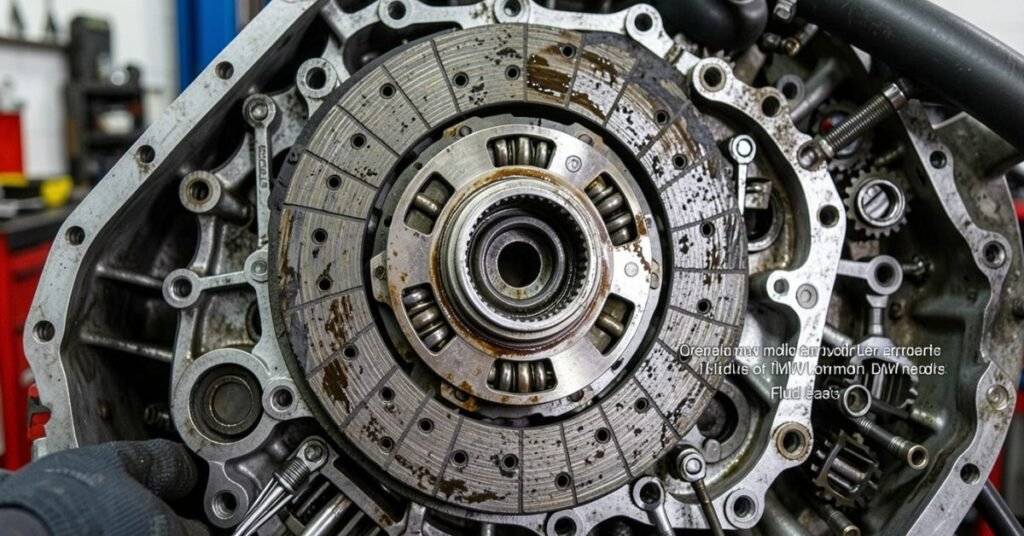
Drivers may also experience difficult gear changes, unusual noises, or grinding when selecting gears. These symptoms can be related to worn synchronizers, bearings, clutch components, or incorrect transmission fluid levels. A professional inspection can help identify the actual cause instead of replacing parts unnecessarily.
Fluid leaks can also occur as seals and other components age. Low fluid levels may increase internal wear and affect transmission operation. Regular inspections and servicing according to the vehicle manufacturer’s requirements can help identify problems early and maintain proper transmission performance.
BMW Manual Transmission Models
BMW has offered manual transmissions across many models and generations, particularly in older cars and performance-focused vehicles. Availability has varied by engine, body style, production year, and market. While automatic transmissions are now more common, some BMW performance models have continued to offer a manual gearbox for drivers who prefer direct control.
Manual transmissions have appeared in BMW sedans, coupes, convertibles, hatchbacks, and sports cars. The table below highlights selected BMW models and generations that were offered with manual transmissions. Exact gearbox and engine combinations can differ between markets.
| BMW Model | Generation | Manual Gearbox | Example Engine Options | Approx. Years |
|---|---|---|---|---|
| BMW 1 Series | E81/E87/E82/E88 | 5- or 6-speed | Various 4- and 6-cylinder engines | 2004–2013 |
| BMW 2 Series | F22/F23 | 6-speed | 220i, 228i, M235i and others | 2014–2021 |
| BMW 3 Series | E30 | 5-speed | Various 4- and 6-cylinder engines | 1982–1994 |
| BMW 3 Series | E36 | 5-speed | Various 4- and 6-cylinder engines | 1990–2000 |
| BMW 3 Series | E46 | 5- or 6-speed | 320i, 325i, 330i, M3 and others | 1997–2006 |
| BMW 3 Series | E90/E92 | 6-speed | 323i, 325i, 328i, 335i, M3 and others | 2005–2013 |
| BMW 3 Series | F30 | 6-speed | Selected 320i, 328i and 340i versions | 2012–2019 |
| BMW 4 Series | F32/F33/F36 | 6-speed | Selected 4 Series engines | 2013–2020 |
| BMW 5 Series | E39 | 5- or 6-speed | Selected 6- and 8-cylinder engines | 1995–2003 |
| BMW Z3 | E36/7 | 5-speed | 1.9i, 2.8i, 3.0i and M Roadster | 1995–2002 |
| BMW Z4 | E85/E86 | 5- or 6-speed | Selected 4- and 6-cylinder engines | 2002–2008 |
| BMW M2 | F87/G87 | 6-speed | 3.0L turbocharged inline-six | 2016–present |
| BMW M3 | Various generations | 5- or 6-speed | Various high-performance engines | 1986–present |
| BMW M4 | F82/G82 | 6-speed | 3.0L turbocharged inline-six | 2014–present |
| BMW M5 | Selected older generations | 5- or 6-speed | Various V8 and V10 engines | 1988–2010 |
Manual transmission availability can vary significantly by country, model year, engine, and trim. Therefore, buyers of a used BMW should confirm the exact gearbox fitted to the specific vehicle rather than relying only on the model name or generation.
Maintenance Tips
Regular maintenance keeps a BMW manual transmission in good condition. Check the transmission fluid at the recommended service interval. Replace old or dirty fluid with the correct type. As a result, the gearbox stays smooth and performs better.
Use the clutch correctly while driving. Avoid resting your foot on the clutch pedal because it increases wear. Moreover, shift gears smoothly without forcing the gear lever. These simple habits help protect the clutch and transmission.
Inspect the transmission for fluid leaks and unusual noises. Fix small problems before they become major repairs. Furthermore, follow BMW’s maintenance schedule for the best results. Therefore, proper care can extend the life of the manual transmission and improve its reliability.
Transmission Fluid
Transmission fluid plays an important role in a BMW manual transmission. It lubricates the gears, bearings, and synchronizers. This reduces friction and heat inside the gearbox. As a result, the transmission shifts smoothly and lasts longer.
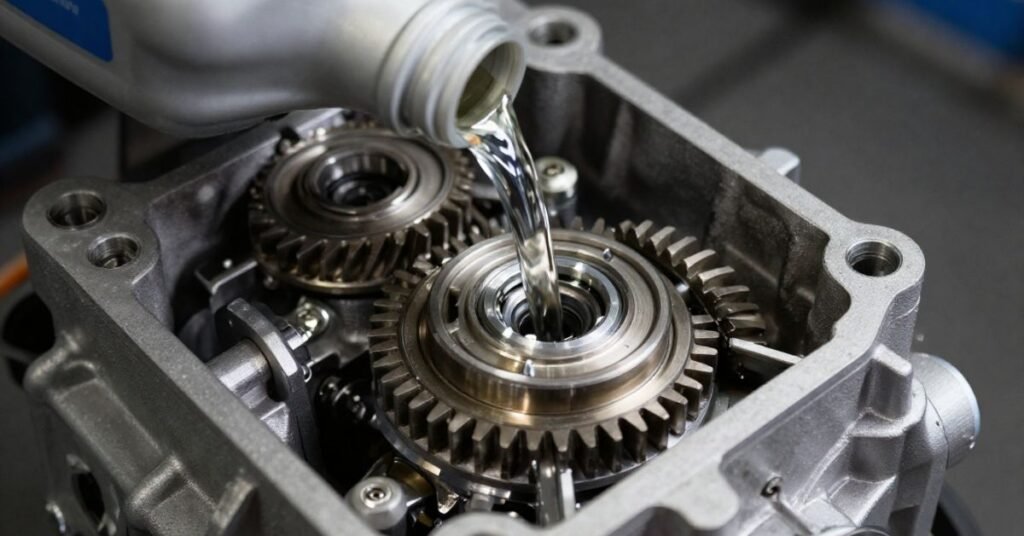
BMW recommends using the correct manual transmission fluid for each model. Using the wrong fluid can affect shifting performance and increase wear. Moreover, old or contaminated fluid may cause hard gear changes and unusual noises. Therefore, always follow the manufacturer’s service recommendations.
Check the transmission fluid during regular maintenance. Replace it if it becomes dirty or reaches the recommended service interval. In addition, inspect the transmission for leaks that could lower the fluid level. Keeping the fluid clean and at the proper level helps maintain reliable performance and protects the transmission from damage.
Repair Costs
The repair cost of a BMW manual transmission depends on the problem and the model. Small repairs, such as replacing seals or changing transmission fluid, usually cost less. However, major repairs can be much more expensive. Labor charges also affect the final bill.
A clutch replacement is one of the most common manual transmission repairs. It usually costs between $800 and $2,000 in the United States, depending on the model and parts used. In Germany, the same repair often costs €900 to €2,200. Therefore, getting quotes from different repair shops can help you save money.
A complete transmission rebuild or replacement costs much more than routine repairs. In the United States, prices typically range from $2,500 to $6,000. In Germany, the cost is often €2,700 to €6,500. Moreover, regular maintenance and early repairs can prevent major damage and reduce long-term ownership costs.
Manual vs Automatic
A BMW manual transmission gives the driver full control over gear changes. An automatic transmission, on the other hand, automatically changes gears. A manual gearbox provides a more engaging driving experience. However, an automatic transmission is easier to drive in heavy traffic. Therefore, the best choice depends on your driving style and daily needs.
Both transmissions have their own advantages. Consider the following points before making a decision:
- Manual Transmission
- More driver control.
- More engaging driving experience.
- Usually lower maintenance costs.
- Better suited for driving enthusiasts.
- Automatic Transmission
- Easier to drive in city traffic.
- Smooth and convenient gear changes.
- Better for daily commuting.
- Available in most modern BMW models.
Buying Guide
Choose a BMW manual transmission model that matches your driving needs and budget. Think about whether you want a daily driver, a classic BMW, or a performance model. Be sure to check the vehicle’s service history as well. A well-maintained car is usually a better choice.
Inspect the clutch and transmission during a test drive. Make sure the gears shift smoothly without grinding or unusual noises. Moreover, look for fluid leaks under the car and listen for strange sounds from the gearbox. These checks can help you avoid costly repairs.
Compare prices, mileage, and maintenance records before you buy. It is also a good idea to have the car inspected by a trusted mechanic. Furthermore, review the ownership costs, including insurance and future maintenance. Therefore, careful research will help you choose the right BMW manual transmission with confidence.
Expert Tips
Learn the correct clutch and shifting technique before driving a BMW manual transmission. Shift gears smoothly and avoid forcing the gear lever. As a result, the transmission will perform better and last longer. Good driving habits also reduce unnecessary wear.
Follow the recommended maintenance schedule for your BMW. Change the transmission fluid when required and inspect the clutch regularly. Moreover, fix small problems as soon as they appear. Early repairs can prevent expensive transmission damage.
Always use high-quality replacement parts and the correct transmission fluid. Buy a BMW manual transmission with a complete service history whenever possible. Furthermore, have the gearbox inspected by a qualified mechanic before purchasing a used car. Therefore, you can enjoy reliable performance and lower long-term ownership costs.
Conclusion
A BMW manual transmission offers a fun and rewarding driving experience. It gives you more control and creates a stronger connection with the car. Moreover, regular maintenance and proper driving habits help keep the transmission in excellent condition. Choosing the right model also makes ownership more enjoyable.
Whether you plan to buy a new or used BMW, understanding how to operate a manual transmission is important. Compare different models, check the vehicle’s condition, and follow the recommended service schedule. Therefore, you can enjoy smooth performance, lower repair costs, and many years of reliable driving.
FAQs
1. Is a BMW manual transmission reliable?
Yes, a BMW manual transmission is generally reliable when it receives regular maintenance and proper care.
2. Which BMW models come with a manual transmission?
Many BMW models, including the 1 Series, 2 Series, 3 Series, 4 Series, M2, M3, M4, and Z4, have been available with a manual transmission.
3. How often should I change BMW manual transmission fluid?
The service interval depends on the model and driving conditions. However, many owners replace the fluid every 30,000 to 60,000 miles for smooth performance.
4. Is a manual BMW better than an automatic?
A manual BMW offers more driver control and engagement. In contrast, an automatic BMW provides greater convenience, especially in heavy traffic.
5. How long does a BMW manual transmission last?
With proper maintenance and careful driving, a BMW manual transmission can last well over 150,000 miles and often much longer.