BMW horsepower measures how much power an engine can produce. BMW’s performance can be measured by this metric. Different BMW models offer different horsepower figures based on their engines, tuning, and powertrain.
Performance and acceleration can be improved with a BMW with more horsepower. Horsepower, however, is not the only factor to consider. Weight, torque, transmission, and drivetrain also affect how a BMW feels on the road.
In this guide, we will explore BMW horsepower across different models and engines. We will look at four-cylinder, six-cylinder, V8, M models, and electric BMWs. You will also learn what affects horsepower and how it relates to torque.
What Is BMW Horsepower?
BMW horsepower measures an engine’s power output. This shows how fast an engine can work. Higher horsepower can help a BMW accelerate faster when combined with strong torque and an efficient transmission.
BMW uses different engines with different horsepower ratings. For example, the BMW 330i uses a 2.0-liter turbocharged four-cylinder engine, while the M340i uses a 3.0-liter turbocharged inline-six. Their power figures differ because their engines and tuning are different.
Horsepower also varies between standard BMW models and M Performance models. The BMW M3 and M4 use the high-output S58 inline-six engine. This gives them significantly more power than regular 3 Series and 4 Series models.
How BMW Horsepower Works
BMW horsepower comes from the engine’s ability to produce power over time. Within its cylinders, the engine burns fuel and air. This creates pressure that moves the pistons and turns the crankshaft.
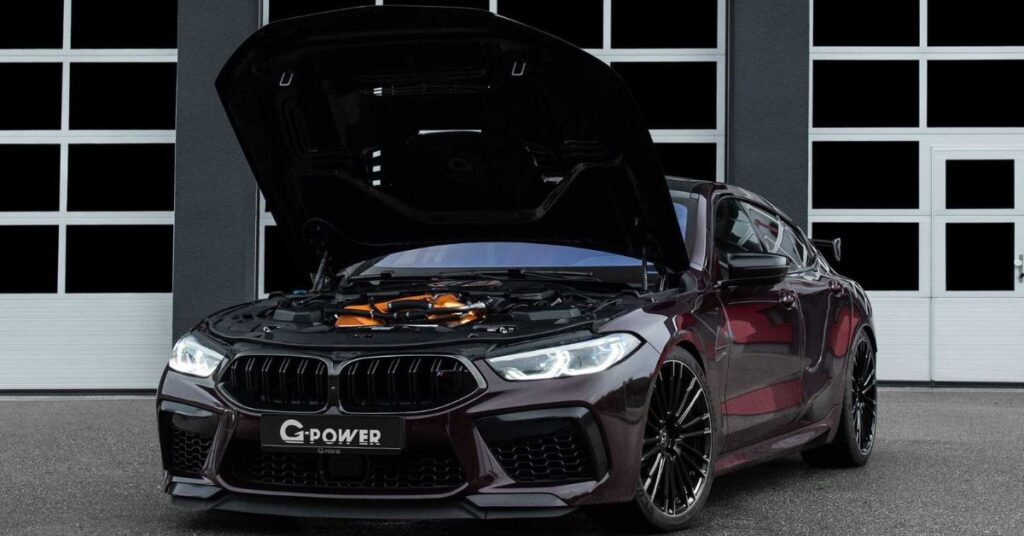
By forcing more air into the engine, turbocharging can increase BMW horsepower. A larger amount of air allows the engine to burn more fuel and produce more power. BMW uses turbocharged engines across many models, including four-cylinder, six-cylinder, and V8 engines.
Horsepower also depends on engine speed, torque, and tuning. The transmission helps deliver this power to the wheels. This is why two BMWs with similar horsepower can have different acceleration and driving performance.
BMW Horsepower Explained
BMW horsepower refers to the power produced by a BMW engine or electric powertrain. It is usually listed in hp or PS, depending on the market. A higher figure generally means the powertrain can produce more power at its rated output.
BMW offers a wide range of power levels across its lineup. For example, the 330i uses a turbocharged four-cylinder engine, while the M340i uses a turbocharged inline-six. M models such as the M3 and M4 use the S58 engine and produce considerably more power.
Horsepower is only one part of BMW performance. Torque, vehicle weight, transmission, gearing, and traction also affect acceleration. This is why two BMWs with similar horsepower can deliver different driving results.
BMW Engine Horsepower
BMW engine horsepower varies widely across different models and engines. Smaller turbocharged four-cylinder engines are used in many entry-level and mid-range BMWs. Larger inline-six and V8 engines are found in higher-performance models.
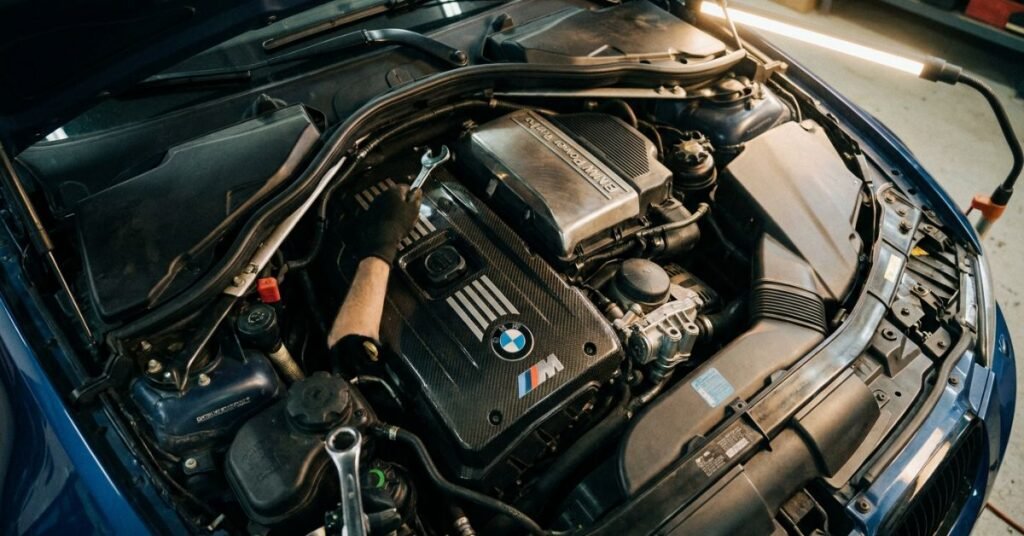
BMW’s 3.0-liter inline-six engines are known for strong power output. The B58 is used in models such as the M340i and delivers strong performance. The S58 is a higher-performance engine used in the M3 and M4.
Engine tuning also changes horsepower. BMW can use different software, turbocharger setups, cooling systems, and hardware to produce different outputs from related engines. This allows BMW to offer different performance levels across its model range.
BMW Horsepower by Model
BMW horsepower changes significantly across different models and engines. For example, the 2026 BMW 330i produces 255 hp, while the M340i produces 386 hp. The M3 ranges from 473 hp to 523 hp, depending on the version.
The table below compares current BMW models and their U.S.-market horsepower ratings. These figures can vary by model year, trim, and market, so always check the exact specification.
| BMW Model | Engine/Powertrain | Horsepower |
| BMW 230i | 2.0L turbo 4-cylinder | 255 hp |
| BMW M240i | 3.0L turbo inline-6 | 382 hp |
| BMW 330i | 2.0L turbo 4-cylinder | 255 hp |
| BMW M340i | 3.0L turbo inline-6 + mild hybrid | 386 hp |
| BMW M2 | 3.0L turbo inline-6 | 453 hp |
| BMW M3 | 3.0L turbo inline-6 | 473 hp |
| BMW M3 Competition | 3.0L turbo inline-6 | 503 hp |
| BMW M3 Competition xDrive | 3.0L turbo inline-6 | 523 hp |
| BMW M4 | 3.0L turbo inline-6 | 473 hp |
| BMW M4 Competition | 3.0L turbo inline-6 | 503 hp |
| BMW M4 Competition xDrive | 3.0L turbo inline-6 | 523 hp |
| BMW X5 M Competition | 4.4L twin-turbo V8 | 617 hp |
| BMW X6 M Competition | 4.4L twin-turbo V8 | 617 hp |
| BMW M5 | 4.4L twin-turbo V8 plug-in hybrid | 717 hp |
| BMW XM Label | 4.4L twin-turbo V8 plug-in hybrid | 738 hp |
BMW lists the M2 at 453 hp, the M3 at 473 hp, and the M3 Competition xDrive at 523 hp. Its current M lineup also lists the M5 at 717 hp and the XM Label at 738 hp.
BMW M Horsepower
BMW M models are built for higher performance than regular BMW models. They use more powerful engines, stronger cooling systems, and performance-focused tuning. Horsepower varies by model, drivetrain, and version.
The BMW M2 produces 453 hp from its 3.0-liter twin-turbo inline-six engine. The M3 and M4 can produce up to 523 hp in Competition xDrive versions. The M5 uses a 4.4-liter twin-turbo V8 plug-in hybrid system and produces 717 hp.
BMW M horsepower is not only about the highest number. Weight, torque, transmission, and traction also affect acceleration. BMW uses these systems together to deliver strong performance while maintaining everyday drivability.
EV Horsepower
BMW electric models produce power through electric motors instead of traditional combustion engines. Their power output can vary by model and drivetrain. For example, the BMW i4 and i5 are available with different motor configurations and power levels.
Electric BMWs can deliver strong power from a standstill. Electric motors provide immediate torque when the accelerator is pressed. This can make an EV feel quick even when its horsepower figure is lower than some high-performance BMW models.
BMW also uses dual-motor setups in some electric models. The second motor can provide all-wheel drive and additional output. Battery capacity, motor configuration, software, and thermal management all affect the performance of BMW electric vehicles.
4-Cylinder vs 6-Cylinder
BMW’s four-cylinder engines are usually smaller and lighter. They can offer strong power with good fuel efficiency. Six-cylinder engines, such as BMW’s 3.0-liter inline-six, generally produce more horsepower and deliver smoother power at higher speeds.
Key differences include:
- 4-cylinder: Lower weight and fuel use
- 6-cylinder: Higher power and stronger acceleration
- 4-cylinder: Common in 2 Series, 3 Series, X1, and X3 models
- 6-cylinder: Used in models such as the M340i, M240i, and higher-performance BMWs
- 6-cylinder: Usually provides stronger torque and a smoother engine feel
What Affects Horsepower?
Engine size can affect BMW horsepower, but it is not the only factor. Turbocharging allows BMW engines to push more air into the cylinders. This can increase power without requiring a much larger engine.
Engine tuning also changes horsepower. BMW can adjust boost pressure, fuel delivery, ignition timing, and engine software. Cooling systems also matter because stable temperatures help the engine maintain its designed output.
The transmission and drivetrain affect how engine power reaches the wheels. Vehicle weight and traction also influence acceleration. This means a BMW with more horsepower does not always feel faster in every driving situation.
Horsepower and Torque
Horsepower and torque are closely related, but they measure different things. Torque is the twisting force produced by the engine. Horsepower measures how quickly the engine can produce that work.
Torque is important for pulling power and strong response at lower engine speeds. Horsepower becomes especially important as engine speed increases. BMW engines use both to deliver acceleration and overall performance.
For example, BMW’s turbocharged inline-six engines can produce strong torque across a wide engine-speed range. This helps the car respond quickly while also providing strong high-speed performance. Weight, gearing, and traction still affect the final result.
BMW Horsepower History
BMW horsepower has increased significantly over the decades. Earlier BMWs often used naturally aspirated engines with lower power outputs. Models such as the E30 M3 produced around 192 hp in their early U.S. specification.
Turbocharging changed BMW engine performance. Modern engines can produce much more power from smaller displacements. For example, the B58 3.0-liter inline-six became known for strong output and broad torque delivery.
BMW M models have also moved to much higher power levels. The E46 M3 produced 333 hp in U.S. Competition Package form, while the current M3 Competition xDrive reaches 523 hp. This change reflects advances in turbocharging, electronics, cooling, and engine management.
How to Increase Horsepower
A BMW can gain horsepower through engine tuning and performance upgrades. An ECU tune can change boost pressure, fuel delivery, and ignition settings. The results depend on the engine, existing hardware, fuel, and tune.
A better intercooler can help turbocharged BMW engines control intake temperatures. A freer-flowing intake or exhaust system may also support airflow. However, these parts do not always provide the same power gain on every BMW.
Hardware upgrades should match the engine and its limits. Stronger cooling and proper maintenance are important for higher-output setups. Before modifying a BMW, check whether the changes affect reliability and emissions compliance.
Conclusion
BMW horsepower varies widely across engines and models. Four-cylinder engines focus on efficiency and everyday performance, while six-cylinder and M engines deliver higher power. Electric BMWs use instant motor torque for quick response.
Horsepower is only one part of performance. Torque, weight, transmission, traction, and engine tuning also matter. Understanding these factors makes it easier to compare BMW models and their power outputs.
FAQs
1. What does BMW horsepower mean?
BMW horsepower measures the power produced by its engine or electric powertrain. Higher horsepower can support stronger acceleration.
2. Which BMW has the most horsepower?
The BMW XM Label produces 738 hp in the U.S. market, making it one of BMW’s highest-output production models.
3. Is BMW horsepower the same as torque?
No. Horsepower measures power output, while torque measures twisting force. Both affect vehicle performance.
4. Does a larger BMW engine always have more horsepower?
Not always. Turbocharging, engine tuning, software, and hybrid technology can give a smaller engine higher output.
5. Can you increase BMW horsepower?
Yes. ECU tuning and suitable hardware upgrades can increase output, but the results depend on the specific engine and setup.