BMW Autonomous Driving refers to the technology that helps a BMW control certain driving tasks with less input from the driver. It can assist with steering, braking, acceleration, lane position, and keeping a safe distance from other vehicles. The level of automation depends on the model and driving system.
What makes this technology interesting is how quickly it is changing the driving experience. Modern BMW systems can reduce driver effort on highways and in heavy traffic. Some features even allow hands-free driving under specific conditions, making long trips more comfortable.
BMW uses cameras, radar, sensors, software, and driver-monitoring systems to support automated driving. Different BMW models offer different levels of assistance, from basic driver aids to more advanced systems. This article explains the main features, technology, safety systems, available models, limitations, and the future of BMW Autonomous Driving.
How BMW Self-Driving Technology Works
BMW self-driving technology uses cameras, radar, sensors, and smart software to understand the road around the car. These systems can detect other vehicles, lane markings, road signs, and nearby objects. The car then uses this information to support the driver while traveling.
The technology can help control steering, speed, and braking in certain driving situations. For example, it may keep the BMW in its lane and maintain a safe distance from the vehicle ahead. Some advanced systems can also assist during highway driving and slow-moving traffic.
A powerful computer constantly processes information from the car’s sensors. It makes quick decisions based on road conditions and traffic movement. However, the driver may still need to stay alert and take control when required, depending on the level of driving assistance being used.
BMW Autonomous Driving Levels
BMW’s autonomous driving technology can be understood in terms of different levels of automation. These levels show how much control the vehicle can handle and how much attention the driver must give. Lower levels primarily assist the driver, while higher levels enable the car to handle more driving tasks under certain conditions.
The main automation levels include:
- Level 0: The driver controls the vehicle at all times.
- Level 1: The car can assist with one task, such as steering or speed control.
- Level 2: The car can control steering and speed together, but the driver must stay alert.
- Level 3: The vehicle can handle driving in certain situations, while the driver must be ready to take over.
- Level 4: The car can drive itself in specific areas or conditions with little driver involvement.
- Level 5: The vehicle can drive fully on its own without driver control.
BMW mainly uses advanced driver-assistance systems that support the driver rather than completely replace them. Some BMW technologies can handle highway driving, lane control, braking, and acceleration. The available automation level depends on the BMW model, market, and local driving laws.
BMW Level 2 Driving Explained
BMW Level 2 driving is an advanced driver-assistance system. It can control steering, acceleration, and braking at the same time in certain situations. The driver remains responsible for the vehicle.
This technology can make highway driving easier and less tiring. It can help keep the car centered in its lane and maintain a safe distance from traffic ahead. Some BMW systems may also support lane changes when conditions allow.
Even with Level 2 driving, the driver must stay alert and be ready to take control. The system does not make the BMW fully self-driving. Its main purpose is to reduce driving effort while keeping the driver involved.
BMW Level 3 Autonomous Driving
BMW Level 3 autonomous driving allows the vehicle to handle more driving tasks on its own in specific conditions. The system can control steering, speed, braking, and lane position. This gives the driver more freedom than a Level 2 system.
With Level 3 driving, the driver may be able to take their attention away from the road for limited periods when the system is active. However, the car can still ask the driver to take control when needed. Because of this, the driver must remain ready to respond.
BMW has developed Level 3 technology for selected models and markets where local laws allow it. These systems are designed mainly for controlled road conditions, such as certain highways. Availability can vary by country, vehicle model, and legal approval.
BMW Personal Pilot L3
BMW Personal Pilot L3 is a Level 3 automated driving system. It can take control of steering, braking, acceleration, and lane position in certain driving conditions. The system is designed to reduce the amount of attention the driver needs to give to the road.
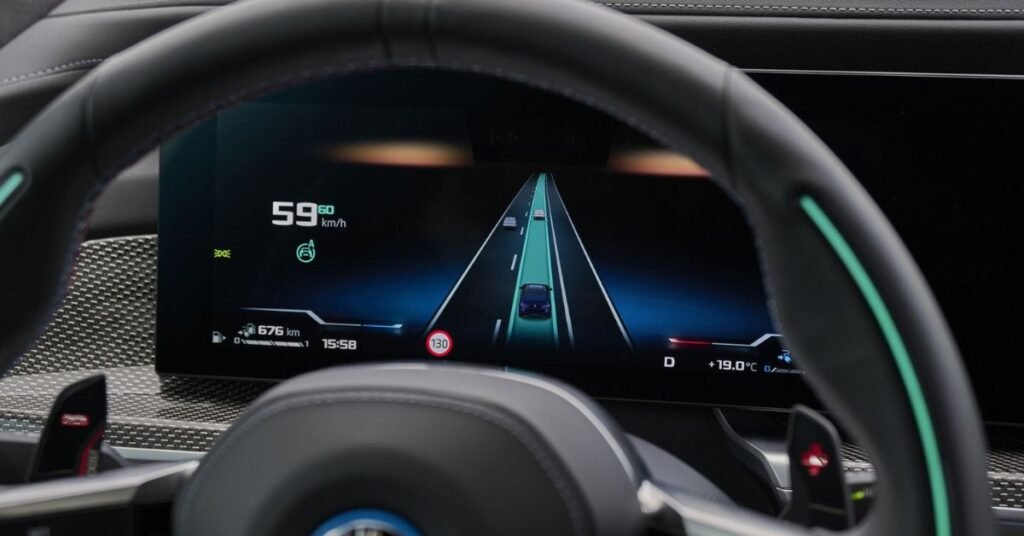
When Personal Pilot L3 is active, the driver can temporarily focus on other permitted activities. The vehicle continues to monitor traffic and road conditions through cameras, radar, sensors, and advanced software. If the system reaches its limits, it asks the driver to take control again.
BMW Personal Pilot L3 is not a fully self-driving system. It works only under specific conditions and where local laws allow its use. Its main goal is to make driving more comfortable while adding a higher level of automation than traditional driver-assistance systems.
BMW Highway Assistant
BMW Highway Assistant is an advanced driver-assistance feature designed for highway driving. It can help control steering, speed, and the distance from the vehicle ahead. On supported roads and in certain conditions, it can also allow hands-free driving.
The system uses cameras, radar, and other sensors to watch traffic and lane markings. It can keep the BMW centered in its lane and adjust speed when traffic changes. This can make long highway trips feel easier and less tiring.
BMW Highway Assistant still requires the driver to stay attentive. A driver-monitoring system checks whether the driver is ready to take control when needed. The feature is not fully autonomous, and its availability depends on the BMW model, road, and market.
BMW Driving Assistant Professional
BMW Driving Assistant Professional is an advanced safety and driver-assistance package. It combines several technologies to help with steering, speed, braking, and lane control. The system is designed to make driving safer and more comfortable.
It can help the car stay centered in its lane and keep a safe distance from vehicles ahead. It may also assist with lane changes and traffic situations on supported roads. These features can reduce stress during long highway trips and heavy traffic.
The driver remains responsible for the vehicle when using Driving Assistant Professional. The system does not turn the BMW into a fully self-driving car. Its features can also vary depending on the BMW model, country, and road conditions.
BMW Hands-Free Driving
BMW hands-free driving allows the driver to take their hands off the steering wheel on certain approved roads and under specific conditions. The system can manage steering, speed, and lane position while it is active. This can make highway driving feel more relaxed.
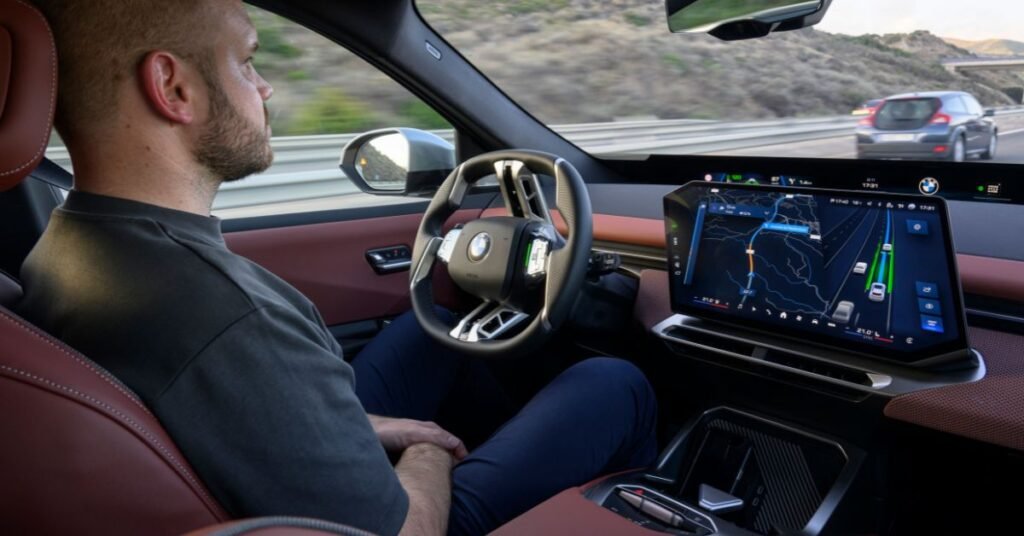
The technology uses cameras, radar, sensors, and driver-monitoring systems to watch the road and the person behind the wheel. It can keep the car centered in its lane and maintain a safe distance from other vehicles. Some BMW models also support assisted lane changes.
Hands-free driving does not mean the car is fully autonomous. The driver must stay alert and be ready to take control when the system asks. Availability depends on the BMW model, road type, market, and local laws.
Sensors, Cameras, Radar, and LiDAR
BMW uses different types of sensors to understand what is happening around the vehicle. Cameras can read lane markings, traffic signs, and nearby objects. They also help the car recognize vehicles, pedestrians, and other road users.
Radar helps measure the speed and distance of vehicles ahead. It works well in different weather and lighting conditions. Some advanced BMW systems also use LiDAR, which creates a detailed view of the road and surrounding objects.
All of this information is sent to the car’s computer system. The software quickly analyzes the data and helps control steering, braking, and acceleration when needed. By combining cameras, radar, sensors, and LiDAR, BMW can make its driver-assistance systems more accurate and reliable.
BMW Autonomous Driving Safety
BMW autonomous driving safety is built around cameras, radar, sensors, and smart software. These systems watch the road, traffic, lane markings, and nearby vehicles. They help the car react to changing driving conditions.
The technology can support safe driving by controlling speed, braking, and lane position when needed. Driver-monitoring systems can also check whether the person behind the wheel is paying attention. If the system reaches its limits, it can ask the driver to take control.
BMW also uses warnings and safety alerts to reduce the risk of accidents. However, autonomous driving features still have limits. Drivers should follow road laws, understand the system, and stay ready to respond when required.
BMW vs Tesla Autonomous Driving
These two take different approaches to automated driving.BMW focuses heavily on structured driver assistance, such as Highway Assistant, which can provide attentive hands-free driving on certain controlled-access highways. BMW has also introduced Level 3 Personal Pilot L3 in supported markets, where the system can take over the driving task under specific conditions.
Tesla offers Full Self-Driving (Supervised), or FSD, which can handle a wider range of driving situations, including lane changes, turns, intersections, and navigation. However, Tesla clearly states that FSD still requires active driver supervision and does not make the vehicle fully autonomous. This means Tesla offers broad assisted-driving capability, while BMW also has a true Level 3 system for limited conditions in approved markets.
| Feature | BMW | Tesla |
| Main System | Highway Assistant / Personal Pilot L3 | Full Self-Driving (Supervised) |
| Hands-Free Driving | Available on certain supported highways | Available through supervised driving features |
| Driver Attention | Required for Level 2 systems | Required with FSD (Supervised) |
| Level 3 Driving | Available in supported markets and conditions | Current FSD remains supervised |
| Highway Driving | Highway Assistant supports hands-free driving up to 85 mph in the U.S. | FSD can assist with highway driving |
| Lane Changes | Active Lane Change is available on supported systems | FSD can make lane changes |
| City Driving | More limited depending on system and market | FSD can handle many city-driving situations |
| Traffic Lights and Stops | Depends on the BMW system | FSD can respond to traffic lights and stop signs |
| Driver Monitoring | Driver-monitoring technology is used | Driver supervision is required |
| Fully Autonomous? | No, except Level 3 automation within defined operating conditions | No |
| Main Strength | Controlled hands-free and Level 3 technology | Wide range of supervised driving tasks |
| Availability | Depends on model, market, road, and package | Depends on vehicle, hardware, software, and region |
BMW’s New Autonomous Driving Strategy
BMW’s new autonomous driving strategy focuses on making advanced driver assistance more useful in everyday driving. The company is expanding hands-free systems such as Highway Assistant across more models and markets. New BMW vehicles are also getting improved software, sensors, and computing power.
The Neue Klasse generation plays an important role in this plan. The new BMW iX3 brings updated automated-driving technology, and BMW says Neue Klasse innovations will spread to around 40 new models and model updates by 2027. This should make smarter driving assistance available across a much wider part of the BMW range.
BMW is also continuing to develop different levels of automation instead of relying on one system. It has already combined Level 2 Highway Assistant and Level 3 Personal Pilot L3 in the 7 Series in approved markets. The long-term goal is to make driving safer, easier, and more comfortable while gradually increasing the amount of work the vehicle can handle.
Conclusion
BMW autonomous driving technology is making driving easier, safer, and more comfortable. Features such as Highway Assistant, Driving Assistant Professional, and Personal Pilot L3 can handle some driving tasks under certain conditions. However, drivers still need to understand the limits of each system.
BMW is also improving its software, sensors, and hands-free driving technology for future vehicles. As these systems become more advanced, drivers can expect better assistance and more automation. The move toward fully autonomous driving will take time, but BMW is clearly making steady progress.
FAQs
1. Does BMW have autonomous driving?
Yes. BMW offers advanced driver-assistance and automated driving features, including Highway Assistant and, in some markets, Level 3 technology.
2. Which BMW models have self-driving features?
Models such as the BMW 5 Series, 7 Series, iX, X5, X7, and others may offer advanced driving assistance. Availability depends on the model and market.
3. What level of autonomous driving does BMW offer?
BMW offers Level 2 driver assistance on several models. It has also introduced Level 3 automated driving in selected vehicles and approved markets.
4. Can a BMW drive hands-free?
Yes. BMW Highway Assistant allows hands-free driving on certain supported highways. The driver must remain attentive and ready to take control.
5. Is BMW autonomous driving fully self-driving?
No. Current BMW systems work only under specific conditions and have limits. Drivers must follow the requirements of the system being used.