A BMW engine is the power unit that moves a BMW vehicle. It converts fuel or electricity into power to drive the car. BMW builds different engine types to suit daily driving, luxury, and high-performance models.
BMW is well known for making smooth and powerful engines. Some engines are famous for their reliability, while others deliver exciting performance. Choosing the right engine can make a big difference in your driving experience.
This guide explains the main BMW engine types, popular engine families, and their performance. It also covers reliability, common problems, maintenance tips, and replacement costs. By the end, you will have a clear understanding of which BMW engine best fits your needs.
BMW Engine Types
BMW offers different engine and powertrain options to meet a range of driving needs. Depending on the model and market, BMW vehicles may use petrol, diesel, plug-in hybrid, or fully electric powertrains. Each option provides a different balance of performance, efficiency, and everyday usability. The right choice depends on the vehicle, driving habits, and local conditions.
BMW has also used several engine layouts throughout its history, including inline-three, inline-four, inline-six, V8, V10, and V12 configurations. Smaller engines generally focus on efficiency and everyday performance, while larger engines can provide greater power and stronger acceleration. BMW M models use specially developed high-performance powertrains designed for performance-focused driving.
Many modern BMW petrol and diesel engines use technologies such as turbocharging, direct fuel injection, and variable valve timing. These systems help improve power delivery and efficiency. Regular servicing, including timely oil changes and inspections, is important for maintaining engine performance and long-term reliability.
Popular Engine Families
BMW has developed many engine families over the years, with each generation introducing changes in performance, efficiency, and technology. Some engines focus on smooth everyday driving, while others are designed for higher performance. Popular BMW engine families include the B-series, N-series, M-series, and S-series.
The B-series includes engines such as the B38, B48, and B58. These engines use modern technologies, including turbocharging, and appear in a wide range of BMW models. The N-series includes engines such as the N20, N52, N54, and N55, which were used in many BMW vehicles from earlier generations.
The M-series includes engine codes such as the M50, M52, and M54, which are well known among BMW enthusiasts for their inline-six configurations and use in older BMW models. The S-series represents BMW’s high-performance engines, including the S54, S55, S58, and S63, which have powered various BMW M models.
Engine specifications, performance, and reliability can vary significantly between individual engines and production years. Therefore, buyers should check the exact engine code and vehicle generation when comparing BMW engines.
BMW Engine Performance
BMW engines are known for smooth and responsive performance. They deliver strong acceleration and steady power at different speeds. Many models also provide a good balance between performance and fuel efficiency.
Modern BMW engines use technologies such as turbocharging, direct fuel injection, and variable valve timing. These features increase power while reducing fuel consumption. As a result, drivers enjoy quicker acceleration and a more enjoyable driving experience.
Performance depends on the engine type and model. Four-cylinder engines are ideal for daily driving and better fuel economy. Inline-six, V8, and BMW M engines offer higher horsepower and faster acceleration. Choosing the right BMW engine depends on your driving style and performance needs.
Common Engine Problems
BMW engines can develop different problems as mileage and age increase. The type of issue depends on the engine family, model year, driving conditions, and maintenance history. Regular servicing can help identify developing problems before they become more serious.
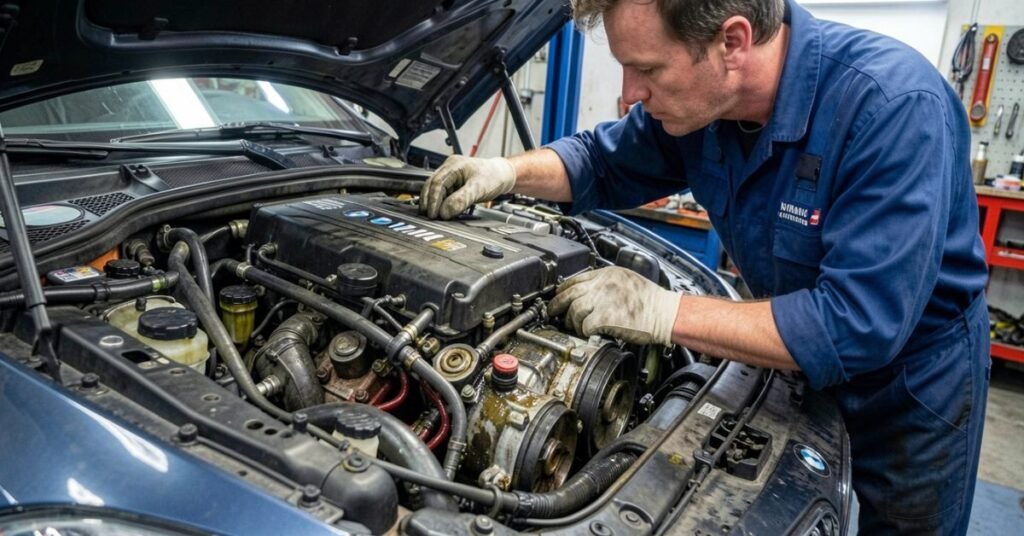
Oil leaks and coolant leaks can occur as seals, gaskets, hoses, and other components wear over time. Some BMW engines may also experience cooling-system issues, including water pump or thermostat faults, which can contribute to overheating if they are not addressed. Turbocharged engines can develop issues with related components, while carbon deposits may affect certain direct-injection engines.
Drivers should pay attention to warning signs such as unusual engine noises, rough idling, reduced performance, warning lights, or visible fluid leaks. Excessive smoke can also indicate a problem that requires inspection. Following the recommended maintenance schedule, using the correct engine oil, and addressing warning signs promptly can help maintain reliable engine operation.
Petrol vs Diesel BMW Engine
Petrol and diesel BMW engine options each have different strengths. These engines deliver quicker acceleration, smoother performance, and a quieter driving experience. Diesel engines produce more torque and usually offer better fuel economy. The best choice depends on how and where you drive.
If you mainly drive in the city, a petrol BMW engine is often the better option. However, if you travel long distances, a diesel engine can help reduce fuel costs. Before making a decision, compare your driving needs, maintenance budget, and performance expectations.
Petrol BMW Engine
- Smoother and quieter performance
- Faster acceleration
- Better for city driving
- Usually has higher fuel consumption
Diesel BMW Engine
- Better fuel efficiency
- Higher torque for highway driving
- Ideal for long-distance travel
- May have higher maintenance costs over time
BMW Engine Maintenance
Regular maintenance keeps a BMW engine running smoothly and helps prevent costly repairs. Follow the recommended service schedule and check the engine regularly. Small maintenance tasks can greatly improve engine life.
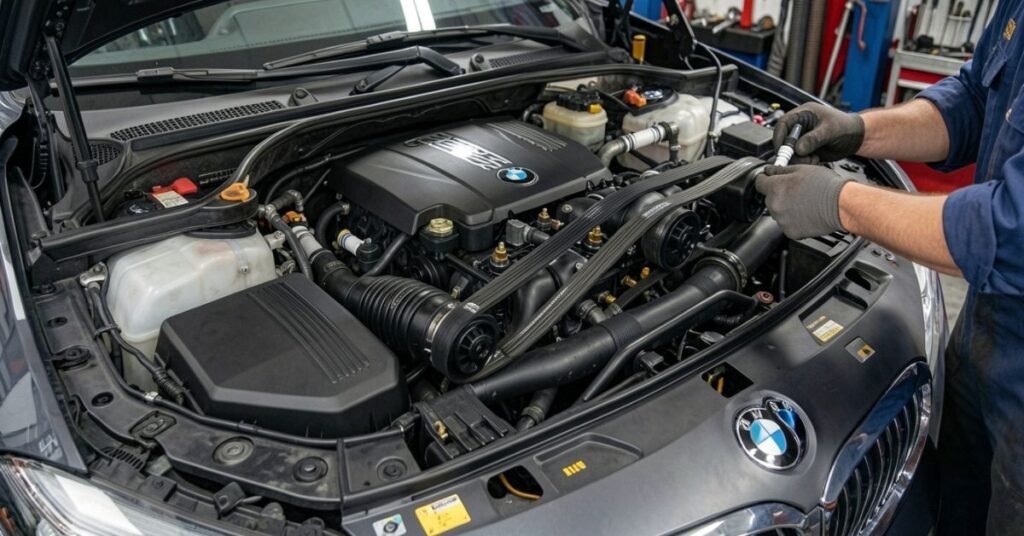
Change the engine oil and oil filter at the correct intervals. Check the coolant, air filter, spark plugs, and drive belts during routine service. Also, inspect for oil leaks or unusual engine noises. Fixing small problems early can prevent bigger issues later.
Always use high-quality parts and the correct engine oil recommended by BMW. Keep the cooling system in good condition to avoid overheating. Regular inspections and proper care will help your BMW engine deliver reliable performance for many years.
BMW Engine Oil Guide
Choosing the right oil is important for a BMW engine. Engine oil lubricates moving parts and reduces friction. It also helps control engine temperature and keeps the engine clean. Using the correct oil improves performance and extends engine life.
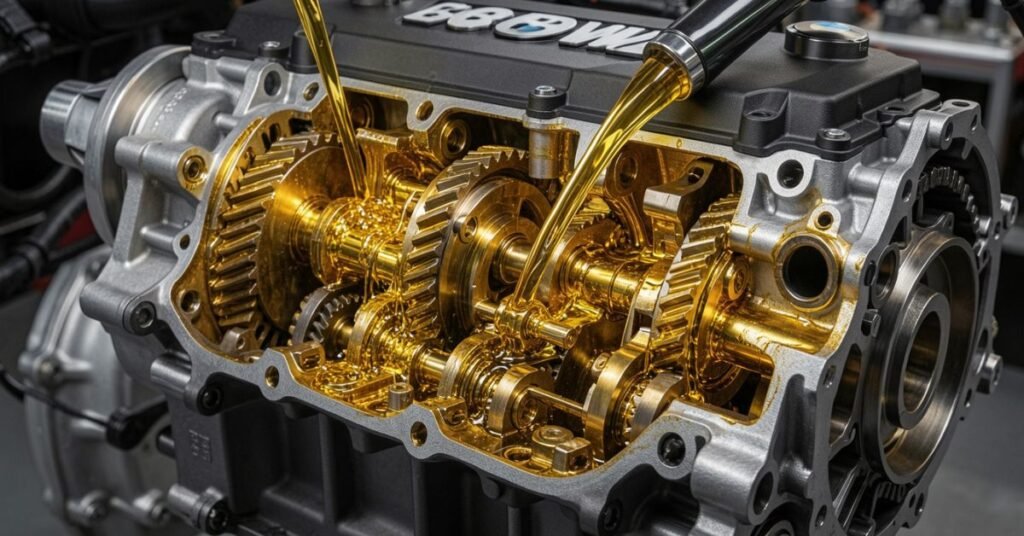
BMW recommends using fully synthetic engine oil that meets its approved standards. The correct oil grade depends on the engine model and climate. Common grades include 0W-20, 0W-30, 5W-30, and 5W-40. Always check your owner’s manual before adding or changing engine oil.
Check the engine oil level regularly and top it up when needed. Change the oil and filter at the recommended service intervals. Fresh, high-quality oil protects the engine from wear and helps it run smoothly for many years.
BMW Engine Specifications
BMW engines come in different configurations, displacements, and performance levels. Over the years, BMW has used three-cylinder, four-cylinder, six-cylinder, V8, V10, and V12 engines across its model range. Many modern petrol and diesel engines use turbocharging and direct fuel injection, while some older engines used naturally aspirated designs.
The specifications of a BMW engine depend on its exact engine code, production year, vehicle model, and market. The table below provides a general overview of selected BMW engines rather than a complete list. Power figures can vary between versions and applications.
| Engine Code | Configuration | Displacement | Cylinders | Aspiration | Fuel Type | Example Applications |
|---|---|---|---|---|---|---|
| B38 | Inline-3 | 1.5L | 3 | Turbocharged | Petrol | 1 Series, 2 Series, X1 |
| B48 | Inline-4 | 2.0L | 4 | Turbocharged | Petrol | 2 Series, 3 Series, X1, X3 |
| B58 | Inline-6 | 3.0L | 6 | Turbocharged | Petrol | 3 Series, 5 Series, Z4, X3, X5 |
| B47 | Inline-4 | 2.0L | 4 | Turbocharged | Diesel | 1 Series, 3 Series, 5 Series, X1 |
| B57 | Inline-6 | 3.0L | 6 | Turbocharged | Diesel | 5 Series, 7 Series, X5 |
| N20 | Inline-4 | 2.0L | 4 | Turbocharged | Petrol | 1 Series, 3 Series, 5 Series, X1 |
| N52 | Inline-6 | 2.5L–3.0L | 6 | Naturally Aspirated | Petrol | 3 Series, 5 Series, X3 |
| N54 | Inline-6 | 3.0L | 6 | Twin-Turbocharged | Petrol | 1 Series, 3 Series, Z4 |
| N55 | Inline-6 | 3.0L | 6 | Turbocharged | Petrol | 2 Series, 3 Series, 4 Series, X3 |
| N63 | V8 | 4.4L | 8 | Twin-Turbocharged | Petrol | 5 Series, 7 Series, X5, X7 |
| S55 | Inline-6 | 3.0L | 6 | Twin-Turbocharged | Petrol | M3, M4 |
| S58 | Inline-6 | 3.0L | 6 | Twin-Turbocharged | Petrol | M3, M4, X3 M, X4 M |
| S63 | V8 | 4.4L | 8 | Twin-Turbocharged | Petrol | M5, M8, X5 M, X6 M |
| S85 | V10 | 5.0L | 10 | Naturally Aspirated | Petrol | M5, M6 |
These specifications are general references because BMW has produced different versions of the same engine code over multiple years and models. Before buying or servicing a vehicle, check the exact engine code, model year, market specification, and manufacturer documentation for accurate specifications.
BMW Engine Replacement Cost
The cost of replacing a BMW engine depends on the model, engine type, and labor charges. A used engine is usually the most affordable option. A rebuilt or brand-new engine costs more but may offer better reliability. Labor costs also increase the total replacement price.
In the United States, replacing a BMW engine typically costs $4,000 to $12,000 or more. High-performance BMW M engines can cost even more because of their advanced design and expensive parts. The final price also depends on whether you choose a used, rebuilt, or new engine.
Before replacing the engine, compare repair and replacement costs. In some cases, repairing the existing engine is more affordable. Always choose a trusted repair shop and use quality parts. This helps ensure reliable performance and long engine life.
BMW Engine Upgrades
BMW engine upgrades can improve power, throttle response, and overall performance. Many owners upgrade their engines to enjoy a more exciting driving experience. The best upgrade depends on your BMW model and driving goals.
Common upgrades include ECU tuning, performance air intake systems, upgraded exhaust systems, and larger intercoolers for turbocharged engines. Some drivers also install stronger turbochargers or high-performance fuel system components. These upgrades can increase horsepower when installed correctly.
Choose high-quality parts and have them installed by experienced professionals. Regular maintenance is also important after upgrading a BMW engine. A well-planned upgrade can improve performance while keeping the engine reliable for everyday driving.
Expert Tips for BMW Engine Care
Taking good care of your BMW engine starts with regular maintenance. Make sure the engine oil and filter are changed regularly. Check the coolant level and inspect the engine for leaks. These simple steps help keep the engine in good condition.
Always use the correct engine oil and high-quality replacement parts. Let the engine warm up before driving hard, especially in cold weather. Avoid aggressive driving until the engine reaches its normal operating temperature. This reduces wear on important engine components.
Pay attention to warning lights, unusual noises, and changes in engine performance. Fix small problems before they become expensive repairs. Follow BMW’s recommended service schedule to improve reliability. With proper care, your BMW engine can deliver strong performance for many years.
Best BMW Engine Models
BMW has built many excellent engines over the years. Some are known for their reliability, while others are famous for high performance. Popular choices include the B58, B48, N52, S58, and S63. Each engine offers different strengths for different drivers.
The B58 is one of BMW’s most respected turbocharged inline-six engines. It delivers strong power, smooth performance, and good reliability. The B48 is a popular four-cylinder engine that offers a great balance of performance and fuel efficiency. The N52 is also well known for its durability and smooth driving experience.
For maximum performance, many enthusiasts choose the S58 and S63 engines. These engines power BMW M models and produce impressive horsepower. Choosing the best BMW engine depends on your budget, driving style, and performance requirements. Regular maintenance will help any of these engines perform at their best.
BMW Engine Reliability
BMW engines are known for strong performance and solid engineering. Many models can last for hundreds of thousands of miles with proper care. However, reliability depends on the engine family, maintenance history, and driving habits.
Some BMW engines have earned a better reputation than others. The B58, B48, and N52 are often considered among the most reliable BMW engines. On the other hand, some older engines may develop oil leaks, cooling system problems, or timing chain issues if they are not maintained properly.
Regular servicing is the key to keeping a BMW engine reliable. Change the engine oil on time and use high-quality parts. Fix small issues before they become major repairs. With proper maintenance, a BMW engine can provide dependable performance for many years.
Conclusion
A BMW engine is designed to deliver a balance of power, efficiency, and driving enjoyment. BMW offers many engine options, from fuel-efficient models to high-performance M engines. Choosing the right engine depends on your driving needs, budget, and maintenance plans.
Regular maintenance is the best way to keep a BMW engine in excellent condition. Using the correct engine oil, replacing worn parts on time, and following the service schedule can improve reliability and performance. With proper care, a BMW engine can provide a smooth and enjoyable driving experience for many years.
FAQs
1. What is the most reliable BMW engine?
The B58, B48, and N52 are widely considered among the most reliable BMW engines because they offer strong performance and good long-term durability.
2. How long does a BMW engine last?
With proper maintenance, a BMW engine can last 200,000 to 300,000 miles or even more, depending on the model and driving habits.
3. Which BMW engine is best for performance?
The S58 and S63 engines are among BMW’s best performance engines. They power BMW M models and deliver impressive horsepower and acceleration.
4. How often should I change BMW engine oil?
Most BMW engines need an oil change every 7,500 to 10,000 miles or once a year. Always follow the service schedule for your specific model.
5. Are BMW engines expensive to maintain?
BMW engines can cost more to maintain than some other brands. However, regular servicing and timely repairs help reduce long-term maintenance expenses.