BMW vs Tesla is a comparison between two of the world’s most popular car brands. BMW is known for luxury, comfort, and sporty driving. Tesla is famous for electric cars, advanced technology, and long driving range. Both brands offer unique features for different types of drivers.
Choosing between BMW and Tesla is not always easy. Some buyers want powerful performance, while others care more about technology or lower running costs. Every driver has different needs, so it is important to compare both brands carefully before making a decision.
This guide compares BMW and Tesla across performance, price, features, design, safety, charging, and ownership costs. It also looks at the strengths and weaknesses of each brand. By the end, you will have a clear idea of which one is the better choice for your lifestyle and budget.
Performance Comparison
BMW is well known for smooth handling and balanced performance. Many models offer powerful engines and precise steering. Drivers who enjoy cornering and road feel often prefer BMW. In addition, BMW provides both petrol and electric performance options.
Tesla stands out with instant electric power. Its electric motors deliver quick acceleration without engine noise. Many Tesla models can reach high speeds in just a few seconds. As a result, they offer an exciting driving experience from the moment you press the accelerator.
Both brands perform well, but they suit different drivers. BMW focuses on comfort, control, and sporty handling. Tesla focuses on fast acceleration and electric efficiency. Therefore, your choice depends on whether you value traditional driving dynamics or modern electric performance.
Design and Exterior
BMW uses a sporty and elegant design. Most models have a bold kidney grille, sharp headlights, and clean body lines. The brand offers sedans, SUVs, coupes, and electric vehicles. As a result, buyers have many styles to choose from.
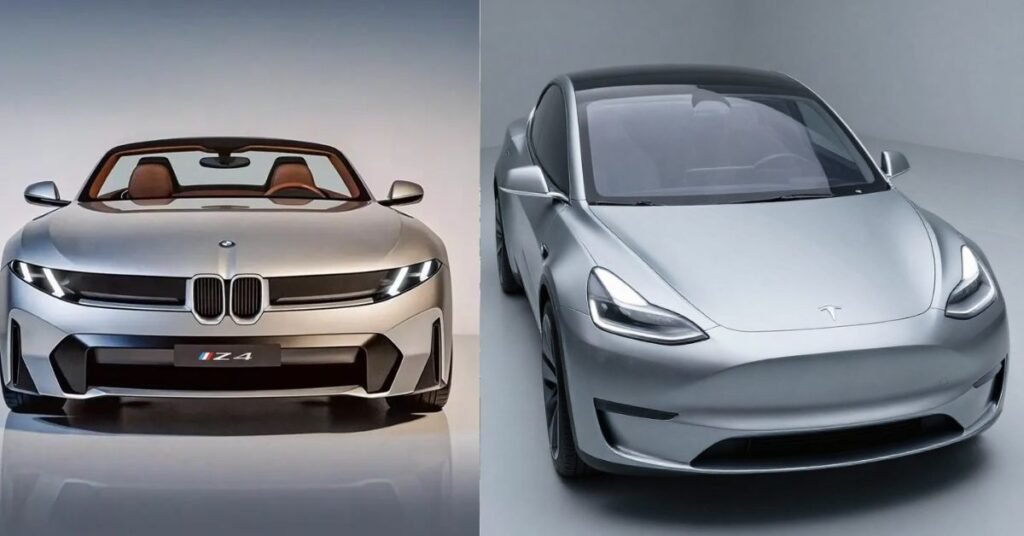
Tesla follows a simple and modern design. Its cars have smooth curves, a closed front, and a clean exterior. The design improves aerodynamics and helps increase driving range. In addition, Tesla keeps the overall look minimal and futuristic.
Both brands build high-quality vehicles with strong materials. BMW focuses on a classic luxury appearance with sporty details. Tesla prefers a modern style with fewer design elements. Therefore, the better choice depends on whether you like traditional luxury or a sleek, minimalist look.
Interior and Technology
BMW offers a premium interior with high-quality materials. The seats are comfortable and supportive for long drives. Drivers also get a mix of digital screens and physical buttons. This layout makes many controls easy to use.
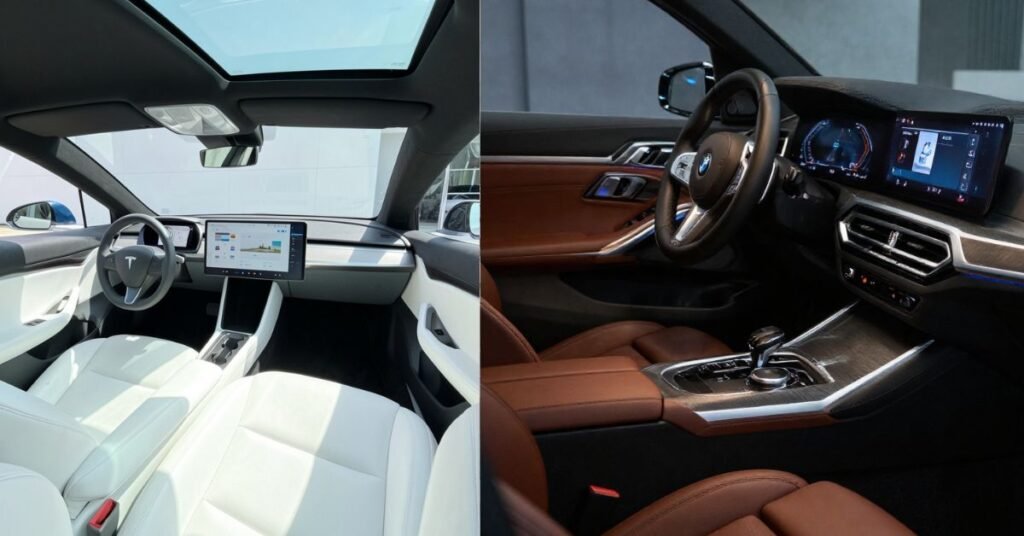
Tesla has a clean and modern cabin. Most functions are controlled through a large touchscreen. The dashboard has very few buttons, which creates a simple look. In addition, Tesla provides regular software updates that add new features over time.
Both brands include advanced technology and safety systems. BMW focuses on comfort, luxury, and an enjoyable driving experience. Tesla puts more attention on smart software, connectivity, and innovative features. Therefore, the right choice depends on the type of cabin and technology you prefer.
Battery Range and Charging
Tesla offers several electric vehicles with different battery capacities and driving ranges. Its Supercharger network provides fast-charging access at many locations, although coverage varies by country and region.
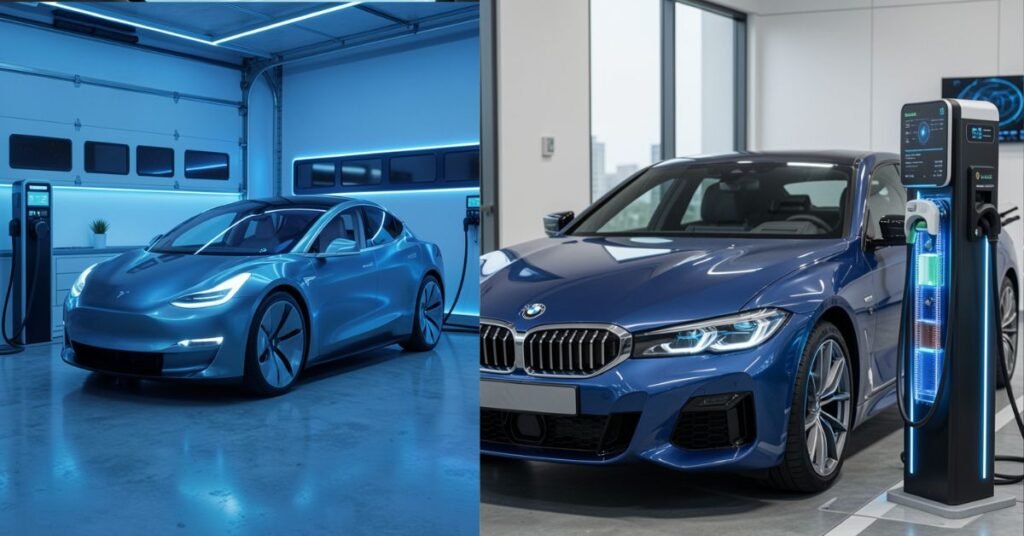
BMW also offers electric models such as the i4, i5, i7, and iX with fast-charging capability. These vehicles can use compatible public charging networks, while charging times depend on the model, battery level, and charger output.
Both brands continue to develop EV technology and charging solutions. Tesla may be convenient for drivers who have good access to Superchargers, while BMW offers access to a wide range of public charging options. The better choice depends on local charging availability, driving habits, and vehicle requirements.
Safety Features
BMW and Tesla include many advanced safety features. Most models come with automatic emergency braking, lane departure warning, and adaptive cruise control. These systems help drivers avoid accidents and improve road safety. In addition, both brands build their vehicles with strong safety structures.
BMW focuses on driver assistance and control. It offers features such as blind spot monitoring, parking assistance, and a 360-degree camera on many models. These technologies make driving and parking easier. As a result, drivers feel more confident in different road conditions.
Tesla is known for its advanced software and driver assistance technology. Features like Autopilot can help with steering, braking, and keeping the car in its lane. Tesla also improves many features through software updates. Therefore, both brands provide excellent safety, but they take different approaches to protecting drivers and passengers.
Key Differences
BMW and Tesla offer different driving experiences. BMW focuses on luxury, comfort, and sporty handling. Tesla focuses on electric technology, fast acceleration, and smart software. Both brands build premium vehicles, but they appeal to different types of drivers.
Here are the main differences:
- Powertrain: BMW offers petrol, diesel, hybrid, and electric models. Tesla only makes fully electric vehicles.
- Driving Feel: BMW delivers balanced handling and a traditional driving experience. Tesla is known for instant acceleration and smooth electric power.
- Technology: Tesla relies on a large touchscreen and software updates. BMW combines digital features with physical controls.
- Charging: Tesla has its own Supercharger network. BMW uses public fast-charging networks.
- Interior Style: BMW has a classic luxury cabin. Tesla features a clean and minimalist design.
- Best For: BMW suits drivers who enjoy performance and comfort. Tesla is ideal for those who want advanced EV technology and lower fuel costs.
Pros and Cons
BMW offers excellent driving comfort and premium build quality. It also has a wide range of models, including petrol, hybrid, and electric vehicles. However, maintenance and repair costs can be higher than some other brands. In addition, some advanced features are available only in higher trims.
Tesla stands out with quick acceleration, long electric range, and regular software updates. It also has a simple interior and access to a fast-charging network in many regions. On the downside, some buyers feel the interior materials are less luxurious than BMW. Service centers may also be limited in certain areas.
Both brands have clear strengths and a few drawbacks. BMW is a great choice for drivers who value luxury, comfort, and driving dynamics. Tesla is ideal for people who want modern technology and an all-electric driving experience. Therefore, the better option depends on your budget, lifestyle, and personal preferences.
BMW vs Tesla Models Comparison
BMW and Tesla offer vehicles in different sizes, price ranges, and powertrain choices. BMW has a wider lineup that includes petrol, hybrid, plug-in hybrid, and electric models, while Tesla focuses entirely on electric vehicles. This gives BMW buyers more powertrain choices, while Tesla provides a more focused EV lineup.
The table below compares selected BMW and Tesla models with similar vehicle types or market positions. Prices and driving ranges can vary by model year, trim, options, and market, so these figures should be treated as approximate rather than fixed.
| BMW Model | Comparable Tesla Model | Vehicle Type | Powertrain |
|---|---|---|---|
| BMW i4 | Tesla Model 3 | Electric Sedan | Electric |
| BMW i5 | Tesla Model S | Electric Sedan | Electric |
| BMW i7 | Tesla Model S | Luxury Electric Sedan | Electric |
| BMW iX | Tesla Model X | Electric SUV | Electric |
| BMW iX3 | Tesla Model Y | Electric SUV | Electric |
| BMW X3 | Tesla Model Y | Compact/Midsize SUV | Petrol/Hybrid/Electric* |
| BMW X5 | Tesla Model X | Midsize/Large SUV | Petrol/PHEV/Hybrid* |
| BMW M3 | Tesla Model 3 Performance | Performance Sedan | Petrol/Electric |
| BMW M5 | Tesla Model S Plaid | High-Performance Sedan | Plug-in Hybrid/Electric |
| BMW XM | Tesla Model X Plaid | Performance SUV | Plug-in Hybrid/Electric |
Powertrain availability varies by model year and market. The comparisons are based on vehicle type and market position rather than identical specifications.
Daily Driving Experience
BMW offers a smooth and comfortable ride for everyday driving. The steering feels precise, and the suspension handles rough roads well. Many models also have quiet cabins that reduce outside noise. As a result, daily commutes feel more relaxing.
Tesla provides a different driving experience. Its electric motor delivers instant acceleration, making city driving quick and responsive. The cabin is simple, and most controls are on a large touchscreen. In addition, one-pedal driving helps reduce driver effort in heavy traffic.
Both brands are enjoyable for daily use, but they suit different lifestyles. BMW is a strong choice for drivers who value comfort, handling, and traditional luxury. Tesla is ideal for those who want electric efficiency, modern technology, and low running costs. Therefore, the best option depends on your driving habits and personal preferences.
How to Choose the Right One
Start by thinking about your budget and driving needs. If you often travel long distances without access to charging, a BMW petrol or hybrid model may be more convenient. If you want an electric vehicle and have easy access to charging, Tesla is a strong option. Your daily routine should guide your decision.
Next, compare the features that matter most to you. BMW offers luxury interiors, comfortable seats, and sporty handling. Tesla focuses on advanced technology, fast acceleration, and software updates. In addition, test-driving both brands can help you understand their different driving styles.
Finally, consider long-term ownership costs. Check maintenance expenses, insurance rates, charging or fuel costs, and resale value. Also, look at service availability in your area. By comparing these factors, you can choose the vehicle that best fits your lifestyle and budget.
Expert Buying Tips
Set your budget before you start shopping. Compare the purchase price, insurance, and yearly running costs. Also, think about how you will use the car every day. This will help you choose the right model.
Take a test drive before making a decision. Pay attention to comfort, visibility, handling, and cabin features. If you are buying an electric vehicle, check the charging options near your home and workplace. In addition, review the warranty and battery coverage for extra peace of mind.
Compare different models instead of choosing the first one you see. Read owner reviews and check the safety ratings. Also, look at resale value and maintenance costs over time. A little research now can help you make a smarter purchase later.
Best Choice for Different Drivers
BMW is a great choice for drivers who enjoy luxury and sporty performance. It offers comfortable seats, premium materials, and excellent handling. In addition, BMW has a wide range of petrol, hybrid, and electric models. This gives buyers more options to match their needs.
Tesla is ideal for drivers who want an all-electric vehicle with advanced technology. It delivers quick acceleration, impressive driving range, and regular software updates. The simple interior also appeals to people who prefer a modern design. As a result, Tesla is a strong option for tech-focused drivers.
The best choice depends on your lifestyle and priorities. Choose BMW if you value comfort, driving dynamics, and a traditional luxury experience. Choose Tesla if you want electric efficiency, smart features, and lower fuel costs. By comparing your needs with each brand’s strengths, you can make the right decision with confidence.
Conclusion
BMW and Tesla are both excellent brands, but they offer different experiences. BMW stands out for luxury, comfort, and sporty driving. Tesla leads in electric technology, fast acceleration, and software features. Therefore, the better choice depends on what matters most to you.
Before buying, compare the price, performance, charging options, and long-term ownership costs. Also, take a test drive if possible and choose a model that fits your daily needs. A well-informed decision will help you enjoy your car for many years.
FAQs
1. Which is better, BMW or Tesla?
It depends on your needs. BMW is better for luxury and sporty driving, while Tesla is a great choice for electric technology and fast acceleration.
2. Is Tesla cheaper to maintain than BMW?
In many cases, yes. Tesla usually has lower maintenance costs because it has fewer moving parts and does not require oil changes.
3. Does BMW make electric cars like Tesla?
Yes. BMW offers several electric models, including the i4, i5, i7, and iX, along with hybrid and petrol vehicles.
4. Which brand has a longer driving range?
Tesla generally offers a longer electric driving range on many models. However, BMW’s latest electric vehicles also provide a competitive range for daily use.
5. Should I buy a BMW or a Tesla in 2026?
Choose BMW if you want luxury, comfort, and driving performance. Choose Tesla if you prefer an all-electric car with advanced technology and lower running costs.