Honda and BMW are two of the world’s most popular car brands. However, they serve different types of drivers. Honda focuses on reliability, affordability, and fuel efficiency. In contrast, BMW delivers luxury, strong performance, and advanced technology. Therefore, comparing these brands helps buyers understand which one matches their needs.
Choosing between Honda and BMW can feel difficult. Both brands offer quality vehicles and loyal customer bases. However, they differ in price, driving experience, maintenance costs, and features. As a result, many buyers wonder whether a practical Honda or a premium BMW offers the better overall value.
This guide compares Honda and BMW in every important area. First, it looks at their model lineup and performance. Next, it explores interior quality, safety, reliability, fuel economy, and ownership costs. Finally, it explains pricing, highlights the best models, and helps you decide which brand fits your budget and lifestyle.
Brand History and Reputation
Honda began its journey in 1948 in Japan. The company first produced motorcycles before expanding into cars. Over the years, Honda built a strong reputation for reliable, fuel-efficient, and affordable vehicles. As a result, millions of drivers trust the brand for daily transportation.
BMW started in Germany in 1916 as an aircraft engine manufacturer. Later, the company shifted its focus to motorcycles and luxury cars. Today, BMW stands out for premium quality, powerful performance, and innovative engineering. Therefore, many buyers choose BMW for a more refined driving experience.
Both brands enjoy a strong global reputation, but they appeal to different audiences. Honda attracts drivers who value dependability and low ownership costs. In contrast, BMW appeals to buyers who want luxury, advanced technology, and sporty handling. Consequently, each brand has earned loyal customers across the USA, Germany, and many other markets.
Key Differences Between Honda and BMW
Honda and BMW follow different approaches to building cars. Honda focuses on practicality, reliability, and low ownership costs. In contrast, BMW emphasizes luxury, performance, and advanced engineering. Therefore, the right choice depends on your budget, driving style, and personal preferences.
Here are the main differences between the two brands:
- Price: Honda vehicles usually cost less than BMW models.
- Performance: BMW offers more powerful engines and sportier handling.
- Reliability: Honda has a stronger reputation for long-term dependability.
- Maintenance: Honda generally costs less to maintain and repair.
- Luxury: BMW provides premium interiors and high-end features.
- Fuel Economy: Honda often delivers better fuel efficiency in comparable models.
- Technology: Both brands offer modern technology. However, BMW includes more premium features in higher trims.
Performance and Driving Experience
Honda and BMW deliver different driving experiences. Honda designs its vehicles for smooth daily driving and excellent fuel efficiency. In contrast, BMW focuses on sporty handling and strong acceleration. Therefore, each brand appeals to a different type of driver.
Honda offers reliable gasoline, hybrid, and performance engines across its lineup. Models such as the Civic Si and Civic Type R provide exciting performance while remaining practical. Meanwhile, BMW equips many models with turbocharged four-cylinder, six-cylinder, and V8 engines. In addition, BMW’s rear-wheel-drive platform and precise steering create a more engaging driving experience.
BMW usually leads in power, cornering, and high-speed stability. However, Honda offers comfortable handling, predictable steering, and lower running costs. As a result, Honda suits commuters and families who want dependable performance. On the other hand, BMW fits drivers who value luxury and dynamic driving on highways and winding roads.
Interior Design and Technology
Honda creates clean, practical, and comfortable interiors. The brand uses quality materials that match each vehicle’s price. Moreover, Honda designs its cabins with easy-to-use controls and smart storage spaces. As a result, drivers and passengers enjoy a comfortable experience on daily trips.
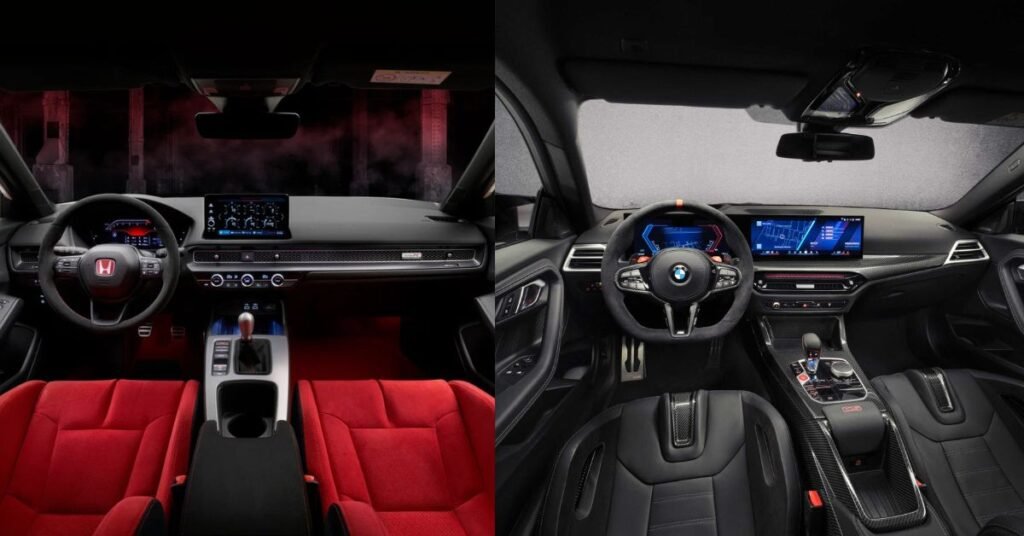
BMW focuses on luxury and premium craftsmanship. The brand uses soft-touch materials, leather upholstery, and modern trim options in many models. In addition, BMW equips its vehicles with large digital displays, customizable ambient lighting, and advanced infotainment systems. Therefore, the cabin feels more upscale and technology-focused.
Both brands offer features such as Apple CarPlay, Android Auto, wireless charging, and digital driver displays. However, BMW includes more advanced technology, such as head-up displays, gesture controls, and premium sound systems in many models. Meanwhile, Honda provides excellent value by offering many useful features as standard equipment. Consequently, Honda suits practical buyers, while BMW appeals to drivers who want a more luxurious interior.
Model Lineup Comparison
Honda and BMW offer vehicles in many popular segments. However, each brand targets a different audience. Honda focuses on affordable sedans, SUVs, minivans, and hybrids. In contrast, BMW specializes in luxury sedans, SUVs, coupes, convertibles, and high-performance M models. Therefore, buyers can find a suitable vehicle regardless of their budget or lifestyle.
The table below compares popular Honda and BMW models in the USA and German markets. Prices are approximate starting MSRPs and may vary by country, trim level, and optional features.
| Vehicle Segment | Honda Model | Approx. Starting Price (USD) | BMW Model | Approx. Starting Price (USD) |
| Subcompact SUV | HR-V | $26,000 | X1 | $41,000 |
| Compact Sedan | Civic Sedan | $25,000 | 2 Series Gran Coupe | $40,000 |
| Compact Performance | Civic Type R | $47,000 | M2 | $69,000 |
| Midsize Sedan | Accord | $29,000 | 5 Series | $59,000 |
| Hybrid Sedan | Accord Hybrid | $34,000 | 530e Plug-in Hybrid | $61,000 |
| Compact SUV | CR-V | $31,000 | X3 | $51,000 |
| Hybrid SUV | CR-V Hybrid | $36,000 | X3 Plug-in Hybrid* | Varies by market |
| Midsize SUV | Passport | $43,000 | X5 | $67,000 |
| Three-Row SUV | Pilot | $41,000 | X7 | $85,000 |
| Pickup Truck | Ridgeline | $41,000 | — | Not Available |
| Minivan | Odyssey | $43,000 | — | Not Available |
| Sports Car | Civic Type R | $47,000 | Z4 Roadster | $55,000 |
| Luxury Coupe | — | Not Available | 4 Series Coupe | $50,000 |
| Electric SUV | Prologue | $48,000 | iX | $88,000 |
| Electric Sedan | — | Not Available | i4 | $58,000 |
| Flagship Luxury Sedan | — | Not Available | 7 Series | $98,000 |
| High-Performance SUV | — | Not Available | X5 M | $127,000 |
| High-Performance Sedan | — | Not Available | M3 | $77,000 |
*Availability of the BMW X3 Plug-in Hybrid depends on the market and model year.
Safety Features
Honda and BMW place a strong focus on vehicle safety. Both brands equip most new models with advanced driver assistance features. However, Honda includes many safety technologies as standard equipment, even on lower trims. As a result, buyers receive excellent safety value without paying for expensive upgrades.
Honda uses the Honda Sensing® suite in most of its vehicles. It includes features such as automatic emergency braking, adaptive cruise control, lane keeping assist, and traffic sign recognition on many models. Meanwhile, BMW offers similar technologies through its Driving Assistance packages. In addition, BMW provides features such as Parking Assistant, Highway Assistant, and a 360-degree camera system on many premium models.
Both brands perform well in crash tests and earn high safety ratings in the USA and Europe. However, BMW often offers more advanced safety technology in higher trims. In contrast, Honda makes many essential safety features standard across its lineup. Therefore, Honda suits buyers who want excellent safety at a lower price, while BMW appeals to drivers who prefer premium driver assistance systems.
Reliability and Build Quality
Honda has earned a strong reputation for long-term reliability. The brand builds vehicles that require fewer major repairs over time. Moreover, many Honda models easily reach high mileage with regular maintenance. As a result, Honda remains a popular choice for drivers who want dependable transportation.
BMW also builds high-quality vehicles with excellent engineering and premium materials. The brand delivers solid construction, refined interiors, and precise fit and finish. However, BMW vehicles use more advanced technology and complex mechanical systems. Therefore, they often require more specialized maintenance as they age.
Both brands produce well-built vehicles, but they serve different priorities. Honda focuses on durability, low maintenance, and everyday dependability. In contrast, BMW emphasizes luxury, performance, and premium craftsmanship. Consequently, Honda usually offers lower long-term ownership costs, while BMW rewards owners with a more refined driving and ownership experience.
Engine Options
Honda offers a wide range of efficient engine options. The lineup includes naturally aspirated and turbocharged four-cylinder engines, as well as hybrid powertrains. Moreover, Honda designs its engines to deliver strong fuel economy and dependable performance. As a result, they suit daily commuting and long-distance driving.
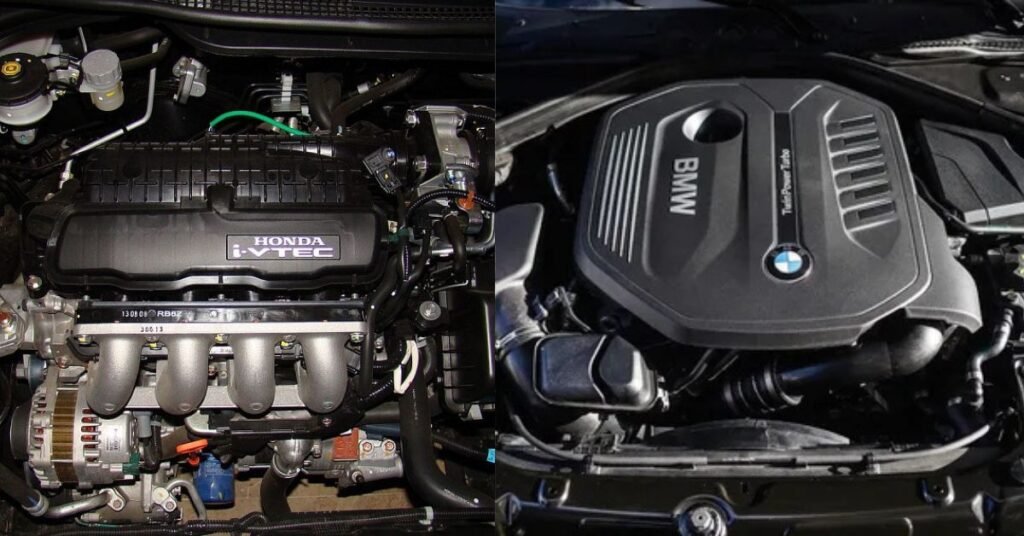
BMW provides a broader selection of high-performance engines. The brand offers turbocharged four-cylinder, inline-six, V8, and fully electric powertrains across its lineup. In addition, BMW includes plug-in hybrid options in several models. Therefore, buyers can choose an engine that balances efficiency with premium performance.
Both brands continue to improve their engine technology. Honda focuses on reliability, smooth operation, and lower running costs. In contrast, BMW emphasizes power, quick acceleration, and responsive driving dynamics. Consequently, Honda appeals to practical drivers, while BMW attracts buyers who want a more exciting driving experience.
Maintenance and Ownership Costs
Honda vehicles usually cost less to own and maintain. Routine services, such as oil changes, brake replacements, and tire rotations, are generally affordable. Moreover, Honda parts are widely available in the USA and Germany. As a result, owners often spend less on regular maintenance over the life of the vehicle.
BMW vehicles require more expensive maintenance because they use premium parts and advanced engineering. In addition, many repairs need specialized tools and trained technicians. Therefore, routine servicing and unexpected repairs often cost more than they do for a comparable Honda. However, BMW includes service packages with some new models, which can reduce maintenance costs during the initial ownership period.
Ownership costs also include insurance, fuel, depreciation, and repairs. Honda usually offers lower insurance premiums and better long-term affordability. In contrast, BMW owners often pay more for insurance and maintenance, but they receive a premium driving experience in return. Consequently, Honda is the better choice for budget-conscious buyers, while BMW suits drivers who prioritize luxury and performance over ownership costs.
Fuel Economy and Electrification
Honda has built a strong reputation for fuel-efficient vehicles. Many of its gasoline and hybrid models deliver excellent mileage for daily driving. Moreover, Honda uses efficient engine technology to reduce fuel consumption without sacrificing reliability. As a result, many buyers choose Honda to save money on fuel.
BMW also offers efficient engines, especially in its turbocharged and plug-in hybrid models. However, the brand focuses on balancing fuel economy with strong performance. Therefore, many BMW vehicles consume more fuel than comparable Honda models, particularly those with larger engines and high-performance trims. Even so, BMW continues to improve efficiency across its lineup.
Both brands have expanded their electrified vehicle offerings. Honda offers hybrid models such as the Accord Hybrid and CR-V Hybrid, along with the all-electric Prologue SUV. Meanwhile, BMW provides plug-in hybrid models and fully electric vehicles, including the i4, i5, iX, and i7. Consequently, both manufacturers support the shift toward cleaner mobility, although BMW currently offers a broader range of premium electric vehicles.
Pricing and Value for Money
Honda offers competitive pricing across its lineup. Most Honda models cost significantly less than comparable BMW vehicles. Moreover, Honda includes many standard features without requiring expensive option packages. As a result, buyers receive excellent value for their money.
BMW positions itself as a premium brand with higher starting prices. However, the extra cost brings luxury materials, advanced technology, stronger performance, and a more refined driving experience. In addition, BMW offers a wider range of customization options, allowing buyers to tailor their vehicles to their preferences. Therefore, many luxury car buyers consider the higher price worthwhile.
Value depends on what you expect from your vehicle. Honda delivers outstanding value through reliability, lower ownership costs, and strong resale value. In contrast, BMW provides value through premium comfort, cutting-edge technology, and engaging performance. Consequently, Honda suits budget-conscious buyers, while BMW appeals to drivers who are willing to pay more for luxury and driving enjoyment.
Best Models for Different Buyers
Honda and BMW offer vehicles for many types of drivers. However, each brand excels in different areas. Honda focuses on practicality, reliability, and affordability. In contrast, BMW emphasizes luxury, performance, and advanced technology. Therefore, the best model depends on your lifestyle and budget.
Honda suits buyers who want dependable daily transportation. The Honda Civic is an excellent choice for commuters and first-time buyers. Meanwhile, the Honda Accord offers comfort for families and long-distance drivers. The Honda CR-V and Pilot provide spacious interiors for growing families. In addition, the Honda Prologue is a good option for buyers who want an all-electric SUV.
BMW appeals to buyers who want premium features and engaging performance. The BMW 3 Series combines luxury with sporty handling for everyday driving. Meanwhile, the BMW X3 offers comfort, technology, and practicality in a compact SUV. Drivers who want maximum performance can choose the BMW M3 or M2. Furthermore, buyers interested in electric vehicles can consider the BMW i4 or iX for a premium EV experience.
Pros and Cons
Both Honda and BMW have clear strengths and weaknesses. Honda focuses on affordability, reliability, and everyday practicality. In contrast, BMW delivers luxury, performance, and advanced technology. Therefore, your choice should depend on what you value most in a vehicle.
Honda Pros
- Lower purchase price
- Excellent reliability
- Lower maintenance costs
- Better fuel economy in many models
- Strong resale value
- Standard safety features across most models
Honda Cons
- Fewer luxury features
- Less powerful engine options
- Limited high-performance lineup
BMW Pros
- Premium interior and build quality
- Powerful engines and sporty handling
- Advanced technology and infotainment
- Wide range of luxury and performance models
- Strong brand image
BMW Cons
- Higher purchase price
- More expensive maintenance and repairs
- Higher insurance costs
- Faster depreciation on some models
Honda offers excellent value for drivers who want dependable and affordable transportation. Meanwhile, BMW provides a premium ownership experience with superior performance and luxury. Consequently, Honda is the better option for budget-conscious buyers, while BMW is the right choice for those who prioritize comfort, technology, and driving excitement.
Conclusion
Honda and BMW both build excellent vehicles, but they target different buyers. Honda stands out with its reliability, lower ownership costs, and strong fuel economy. In contrast, BMW offers luxury, powerful performance, and advanced technology. Therefore, the better choice depends on your budget, driving style, and long-term priorities.
If you want an affordable and dependable car for everyday use, Honda is an excellent option. However, if you prefer a premium driving experience with high-end features, BMW is worth the higher price. Before you make a decision, compare your needs, test-drive your favorite models, and consider the total cost of ownership. As a result, you will choose the brand that best fits your lifestyle.
FAQs
1. Is Honda more reliable than BMW?
Yes. Honda has a stronger reputation for long-term reliability and usually requires fewer costly repairs than BMW.
2. Which brand is cheaper to maintain, Honda or BMW?
Honda vehicles generally cost less to maintain because they have more affordable parts and lower labor costs.
3. Does BMW perform better than Honda?
Yes. BMW offers more powerful engines, sharper handling, and a sportier driving experience than most Honda models.
4. Which brand offers better value for money?
Honda offers better value for buyers who want reliability and lower ownership costs. However, BMW provides better value for those seeking luxury and premium features.
5. Should I buy a Honda or a BMW?
Choose Honda if you want an affordable and dependable daily driver. Choose BMW if you prefer luxury, advanced technology, and exciting performance.